
Tank monitoring in the oil and gas industry is more than just tracking levels. It’s an evolving landscape where new technologies and methodologies are helping companies meet modern challenges—ranging from operational efficiency to environmental sustainability.
Table of Contents
- Edge Computing for Real-Time Decision Making
- Augmented Reality for Tank Inspection and Maintenance
- Cybersecurity for Tank Monitoring Systems
- AI-Powered Leak Detection Systems
- Advanced Material Science for Tank Durability
- Blockchain for Transparent Supply Chain Tank Monitoring
- Robotics for Tank Inspection and Maintenance
- Cloud-Based Tank Monitoring for Greater Scalability
- FAQs on the Future of Tank Monitoring
- How will edge computing improve tank monitoring in the oil and gas sector?
- How can AI enhance leak detection in oil and gas tanks?
- What are the benefits of using blockchain in tank monitoring?
- What role will robotics play in the future of tank monitoring?
- How does cloud computing make tank monitoring more scalable?
- FAQs on the Future of Tank Monitoring
- Conclusion
This guide dives into key trends that are shaping the future of tank monitoring, offering unique insights into how these innovations will change the way oil and gas companies manage their tanks.
Edge Computing for Real-Time Decision Making
Traditionally, data from tank monitoring systems is sent to central servers for processing, with a delay between data collection and action. However, edge computing is changing the game by processing data locally at the point of collection, reducing latency, and enabling real-time decision-making. This is especially important in environments like offshore oil rigs or remote storage facilities, where immediate response times are crucial for safety and efficiency.
By implementing edge computing in oil tank monitoring, companies can instantly detect anomalies such as abnormal temperature changes or leaks and immediately adjust operations. This capability is becoming a standard feature in monitoring services, providing operators with faster, more reliable information to act on, improving safety, and reducing downtime.
Augmented Reality for Tank Inspection and Maintenance
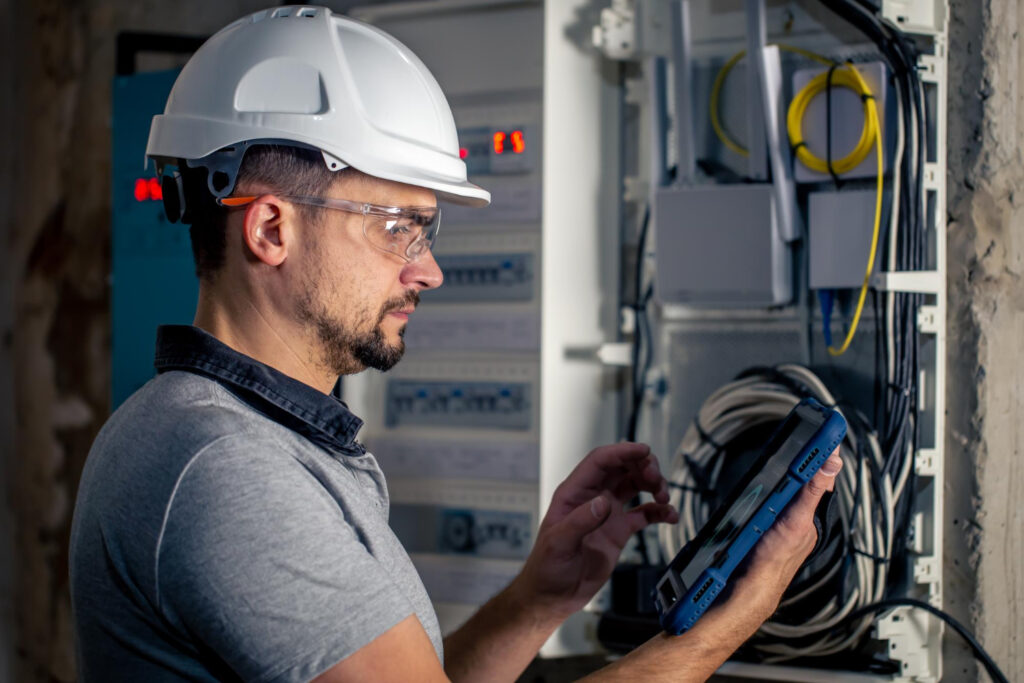
Augmented Reality (AR) is emerging as an innovative tool for tank inspection and maintenance. Technicians equipped with AR glasses or devices can superimpose digital information on the real-world view of a tank. This allows them to see real-time data, such as oil levels, pressure, and temperature, directly overlaid on the tank they’re inspecting.
For instance, modern tank monitoring companies are already experimenting with AR to streamline tank inspections by providing remote experts with real-time guidance. Instead of sending a technician to a remote site, operators can collaborate virtually with engineers from any location. This innovation drastically reduces operational costs and enhances the speed of tank maintenance.
Cybersecurity for Tank Monitoring Systems
With the rise of digital technologies, including oil and gas tank monitoring systems, the need for robust cybersecurity is greater than ever. The integration of IoT devices, data sharing, and remote monitoring creates potential vulnerabilities for cyberattacks. Hackers could potentially disrupt tank operations, leading to safety risks or environmental disasters.
As a result, corporate tank monitors are evolving to include cybersecurity features that protect the integrity of the monitoring systems. This includes implementing multi-factor authentication, real-time threat detection, and encryption protocols. The oil and gas sector is expected to see increased investment in cybersecurity to protect critical infrastructure and maintain operational continuity.

AI-Powered Leak Detection Systems
Leak detection has always been a challenge in the oil and gas industry. Traditional methods can be slow and reactive, but advancements in Artificial Intelligence (AI) are now enabling more proactive leak detection. AI-powered tank monitoring systems can analyze data from sensors placed on tanks and pipelines to identify even the smallest leaks before they escalate into larger problems.
AI algorithms can analyze trends in pressure, temperature, and flow data to predict where leaks are most likely to occur. By combining this with machine learning, these systems can continuously improve their predictions, minimizing the risk of major spills or leaks. This method goes beyond conventional monitoring, offering a smarter, more reliable solution to a long-standing industry issue.
Advanced Material Science for Tank Durability
The materials used in the construction of storage tanks are also evolving. New developments in advanced material science are leading to the creation of more resilient materials that can withstand extreme temperatures, pressures, and corrosive substances like crude oil and natural gas.
For example, composite materials and nano-coatings are being used in the design of oil and gas tank monitoring systems to improve the lifespan and safety of tanks. These materials are more resistant to corrosion and wear, making it less likely that a tank will leak or fail due to environmental factors. This development is helping companies save on maintenance and replacement costs, contributing to long-term operational efficiency.
Blockchain for Transparent Supply Chain Tank Monitoring
Blockchain is not just for cryptocurrencies; it’s finding its way into tank monitoring and the broader oil and gas supply chain. By integrating blockchain technology into monitoring systems, companies can ensure complete transparency and traceability of oil and gas products, from extraction to storage and distribution.
Blockchain creates an immutable ledger of every transaction or event, such as tank inspections, oil transfers, and maintenance activities. This guarantees that the data is secure, transparent, and auditable. For large corporations, using a corporate tank monitor with integrated blockchain can help prevent fraud, ensure compliance with regulations, and improve transparency across the supply chain.
Robotics for Tank Inspection and Maintenance
Robotics is transforming how tank inspections and maintenance are performed. Robotic systems can access areas that are difficult for human inspectors to reach, such as the interior of storage tanks. These robots can be equipped with sensors to monitor for leaks, structural weaknesses, and other potential issues.
Robotics in tank monitoring services can also reduce the risk to human workers, as they can perform inspections in hazardous environments without putting personnel in danger. These systems can operate autonomously, sending real-time data back to central monitoring systems for analysis. This is particularly useful in large, complex operations where human inspections can be costly and time-consuming.
Cloud-Based Tank Monitoring for Greater Scalability
Cloud computing is providing scalable solutions for oil and gas companies with large networks of tanks spread across multiple locations. Instead of relying on individual, local systems, companies can integrate their tank monitoring systems into the cloud, allowing for centralized data analysis and storage.
This cloud-based approach not only reduces costs associated with physical infrastructure but also allows for better collaboration across teams. Operators can access data from any location, ensuring that decision-making is based on the most up-to-date information available. Cloud-based solutions also facilitate easier integration with other systems, such as predictive maintenance tools or environmental compliance software.
FAQs on the Future of Tank Monitoring
How will edge computing improve tank monitoring in the oil and gas sector?
Edge computing allows data to be processed at the point of collection, reducing the delay between detecting an issue and taking corrective action. In this monitoring, this means real-time alerts and faster responses to potential problems, improving safety and operational efficiency.
How can AI enhance leak detection in oil and gas tanks?
AI can analyze sensor data to detect even the smallest changes in tank conditions, such as temperature or pressure fluctuations, that may indicate a potential leak. This allows for earlier detection, reducing the risk of significant environmental or safety incidents.
What are the benefits of using blockchain in tank monitoring?
Blockchain ensures transparency and security in tank monitoring by creating an immutable record of all tank-related transactions, such as inspections, maintenance, and oil transfers. This helps maintain regulatory compliance and enhances traceability throughout the supply chain.
What role will robotics play in the future of tank monitoring?
Robotics will enable automated, remote inspection services, particularly in hard-to-reach or hazardous areas. These systems will enhance safety, reduce costs, and improve the accuracy of inspections by collecting real-time data without human intervention.
How does cloud computing make tank monitoring more scalable?
Cloud computing centralizes data storage and analysis, allowing oil and gas companies to monitor tanks across multiple locations from a single platform. It also offers scalability, as companies can easily add more tanks or sensors without needing significant on-site infrastructure.
Conclusion
The future of tank monitoring in the oil and gas industry is evolving rapidly. With innovations in edge computing, AI, robotics, and blockchain, companies are positioning themselves to operate more efficiently, safely, and sustainably. By embracing these trends, the industry can not only improve operational performance but also mitigate environmental risks and enhance regulatory compliance. As tank monitoring technologies continue to advance, the role of digital solutions will become increasingly vital in the pursuit of a smarter, more secure, and sustainable oil and gas industry.